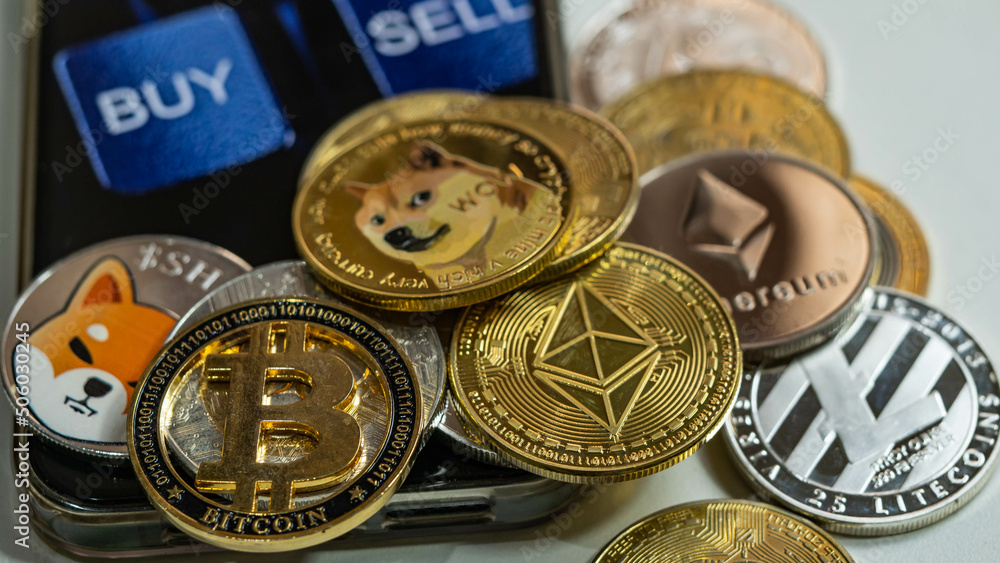
If the idea of buying cryptocurrency makes you a little nervous, you’re in good company. Most people feel the

same way the first time. It seems complicated, a bit risky, and full of words nobody explained to you. But here’s the reassuring truth: buying your first crypto safely is genuinely straightforward once someone walks you through it – and that’s exactly what we’re going to do here.
Think of it like the first time you used an ATM or set up online banking. It felt strange at first, then it became second nature. Crypto is the same. Take it one step at a time, don’t rush, and you’ll be fine. Let’s go through it together.
Before You Start: Two Simple Ground Rules
Before you buy anything, keep two rules in mind. They’ll save you more headaches than any advanced tip ever will.
First, only invest what you’d be okay losing. Crypto prices go up and down – sometimes a lot. This isn’t a reason to be scared off, but it is a reason to start small. There’s no prize for going big on day one.
Second, slow down. Almost every beginner mistake comes from rushing – rushing to buy, rushing to click a link, rushing because someone said “act now.” Scammers love urgency. You never have to.
Step 1: Choose a Reputable Exchange
An exchange is simply a website or app where you can buy, sell, and hold crypto – think of it as the “bank” where you’ll make your first purchase. As a beginner you want one that’s well-established, easy to use, and takes security seriously. For most first-timers, a beginner-friendly exchange like Coinbase is a sensible starting point.
A shortcut worth knowing: if you already use Venmo, you can buy crypto right inside the app that’s probably already on your phone – honestly, it couldn’t be much easier. Tap the “Crypto” section, pick Bitcoin or Ethereum, and buy. It’s a wonderfully low-stress way to dip your toe in. Just know the trade-off: on Venmo (and PayPal), the app holds your crypto for you rather than handing you the keys – which is perfectly fine for a small first taste, but it means it isn’t truly yours to move around the way it is on a dedicated exchange. More on why that matters in Step 5.
Whichever option you choose, make sure you’re on the real website or the official app from your phone’s app store. Scammers build fake look-alike sites. When in doubt, type the address yourself rather than clicking a link from an email or a message.
Step 2: Create Your Account and Verify Your Identity
You’ll create an account with your email and a strong, unique password, then be asked to verify your identity – usually a photo of your ID and a selfie. This part surprises some people, so let’s clear it up: identity verification is a good sign, not a red flag. Reputable exchanges are required by law to do this, just like a bank. An exchange that doesn’t ask who you are is the one to be suspicious of.
While you’re here, do one more thing: turn on two-factor authentication (2FA). It requires a second code – usually from an app on your phone – whenever you log in. It takes two minutes and it’s one of the single best things you can do to protect your money.
Step 3: Add Funds and Decide What to Buy
Next, you’ll connect a payment method – typically a bank account or debit card – and add some money. As a beginner, it’s usually wisest to start with the two most established cryptocurrencies: Bitcoin (BTC) or Ethereum (ETH). They’re the most widely held and the easiest to understand. You can explore others later, but there’s no need to chase obscure coins on your first day. And remember rule number one: even $20 is enough to learn how everything works.
Step 4: Make Your First Purchase
This is the moment you’ve been building up to, and it’s honestly the easiest step. You’ll enter how much you want to spend (in regular dollars – you don’t need to buy a “whole” coin; you can buy a small fraction), review the amount, and confirm. That’s it. Congratulations – you own crypto. Take a breath and notice that the scary part turned out to be the simple part.
A Quick, Honest Word on Fees
Here’s something a lot of beginner guides skip: buying crypto isn’t free. There’s always a small fee, and it’s worth knowing what to expect so it doesn’t catch you off guard. The good news – both Coinbase and Venmo show you the exact fee before you tap confirm, so you’ll always see it coming. Make a habit of glancing at that number before you commit.
To put real figures on it (treat these as ballparks – fees change over time and vary with the amount and payment method):
- On Coinbase, buying about $100 of crypto from a linked bank account typically runs around $2–$3 – roughly a 1.5% fee plus a small built-in “spread” of about half a percent. Paying by debit card costs more (closer to 4%), and very small purchases carry a minimum flat fee of about $1–$3.
- On Venmo, buying $100 of crypto costs a flat $2.49. Smaller amounts cost less (as little as $0.49), and larger amounts switch to a percentage (around 1.5–1.8%). Venmo also tucks a small markup into the price itself.
The point isn’t that fees are bad – they’re just the cost of convenience, like an ATM charging a couple of dollars. The point is: start small, check the fee on the preview screen, and never be surprised by it. A tiny fee on a $20 first purchase is cheap tuition for learning how all this works.
Step 5: Understand Where Your Crypto Lives (and How to Protect It)
Right now, your crypto sits in a wallet on the exchange. For a small amount while you’re learning, that’s perfectly fine. But this step separates people who stay safe from people who get burned. There are two kinds of wallets:
- Hot wallet – connected to the internet (like the one on your exchange or Venmo). Convenient for small amounts, but more exposed.
- Cold wallet – a physical device that stays offline (also called a hardware wallet). Far more secure, and the right choice once you’re holding an amount you’d genuinely miss.
If and when your holdings grow, moving them to a cold wallet like a Trezor or Ledger device is the gold standard for keeping them safe from hackers. Think of the exchange as your checking account and a cold wallet as the safe in your closet.
One phrase you’ll hear a lot: “not your keys, not your coins.” It just means that whoever controls the wallet’s secret keys controls the crypto. A cold wallet puts those keys firmly in your hands.
A Quick Word on Scams
Since you’re new, you’re exactly who scammers target – so let’s inoculate you now. Almost every crypto scam boils down to a few patterns:
- Someone promises guaranteed or “risk-free” returns. (There’s no such thing.)
- Someone pressures you to act immediately.
- Someone you don’t know offers to “help” you invest.
- A link or “support agent” asks for your password or wallet recovery phrase. Never share those with anyone, ever.
If something trips any of these wires, the right move is always the same: stop, and don’t. No legitimate opportunity disappears because you took an hour to think.
Don’t Forget About Taxes
One thing beginners often miss: in many places, selling or trading crypto can be a taxable event. You don’t need to panic on day one, but it’s worth keeping simple records from the start. Tools like CoinLedger can connect to your exchange and do the heavy lifting at tax time. Future-you will be grateful.
Conclusion
Let’s recap how far you just came. You learned how to pick a trustworthy exchange, set up your account safely, make your first purchase, and protect what you own – plus how to sidestep the scams that catch so many newcomers. That’s the whole foundation.
Crypto can feel cryptic at first – it’s right there in the name – but step by step, it stops being mysterious and starts making sense. You’ve taken the hardest step, which is simply beginning.
Keep exploring – the world of crypto is vast, and here at N2KC, we’ll keep breaking it down one plain-English guide at a time.The information here is educational and is not financial or investment advice. Crypto involves risk; always do your own research and never invest more than you can afford to lose.